

Eliminating Paper From Aircraft Oil Analysis
Oil and filter samples moved on a hand-filled checklist. Every error surfaced at the lab, too late to fix.
Aviation
IoT
Data Visualization
Mobile-Android
Responsive
PAPER PROCESS
ELIMINATED
PLATFORM
INTEGRATIONS
CAMP Systems needed to move aircraft oil and filter sampling off paper. The legacy SOAP checklist created identification errors, wrong filter selections, and costly resubmissions, and in aviation maintenance a missed signal is a safety and compliance risk, not a clerical one.
Paper submissions had no validation. A wrong filter choice or an incomplete entry only surfaced as an error after the sample reached the lab, by which point the cost was a failed submission and an engine without a diagnostic record.
Research had to run remotely. The most useful signal came from watching how technicians actually move through a job in the field, not how the system assumed they did, and that field view arrived later in the build than it should have.
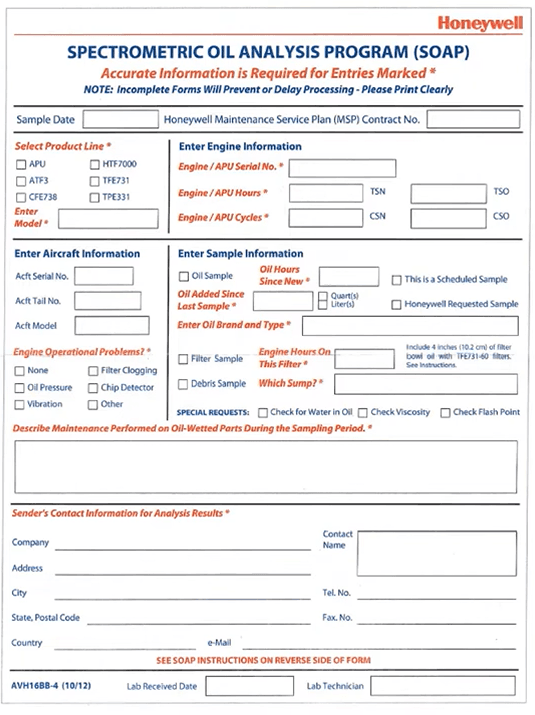
The Honeywell SOAP Paper Form
Research ran remotely, so the legacy form and the failures clustered around it became the spec. One principle drove the build: close each error gap at the moment it opens, not after the sample reaches the lab. That moved judgment forward into the submission itself, so a wrong choice got caught in context at the aircraft rather than flagged days later. The three decisions below apply that principle to the three gaps the paper process left open.
THE WORK
Three decisions, each closing an error gap at the source.
DECISION 1
Validation logic at point of entry, closing the error gap before mistakes reach the lab.
Paper submissions had no validation, so wrong filter selections and incomplete entries only surfaced after the sample reached the lab, when the cost was a failed submission and an engine with no diagnostic record. The fix was not more training. It was moving the check forward, before the technician walked away from the aircraft. Required fields, filter confirmation, and entry checks now run inline, so a wrong selection surfaces in context and gets corrected in the field.
DECISION 2
The right filter for the aircraft, not a list to choose from.
Incorrect filter usage drove much of the costly rework. Technicians were picking from a generic list with nothing tied to the aircraft in front of them, and a list that can return the wrong answer is worse than no list at all. So the list went away. Filter recommendation now derives from aircraft type and engine model, surfacing the correct filter automatically, with no room for a plausible-but-wrong pick.
Lab routing decided at the point of collection.
Manual lab routing was adding days to engine-health diagnostics, with corrections landing only after the delays had stacked up. Lab selection was a maintenance-planning decision, not a logistics afterthought, and getting it wrong at submission rippled straight into engine-health calls. Routing now resolves automatically from technician location and sample type, so the right lab is part of the submission instead of a correction after the fact.
OUTCOMES
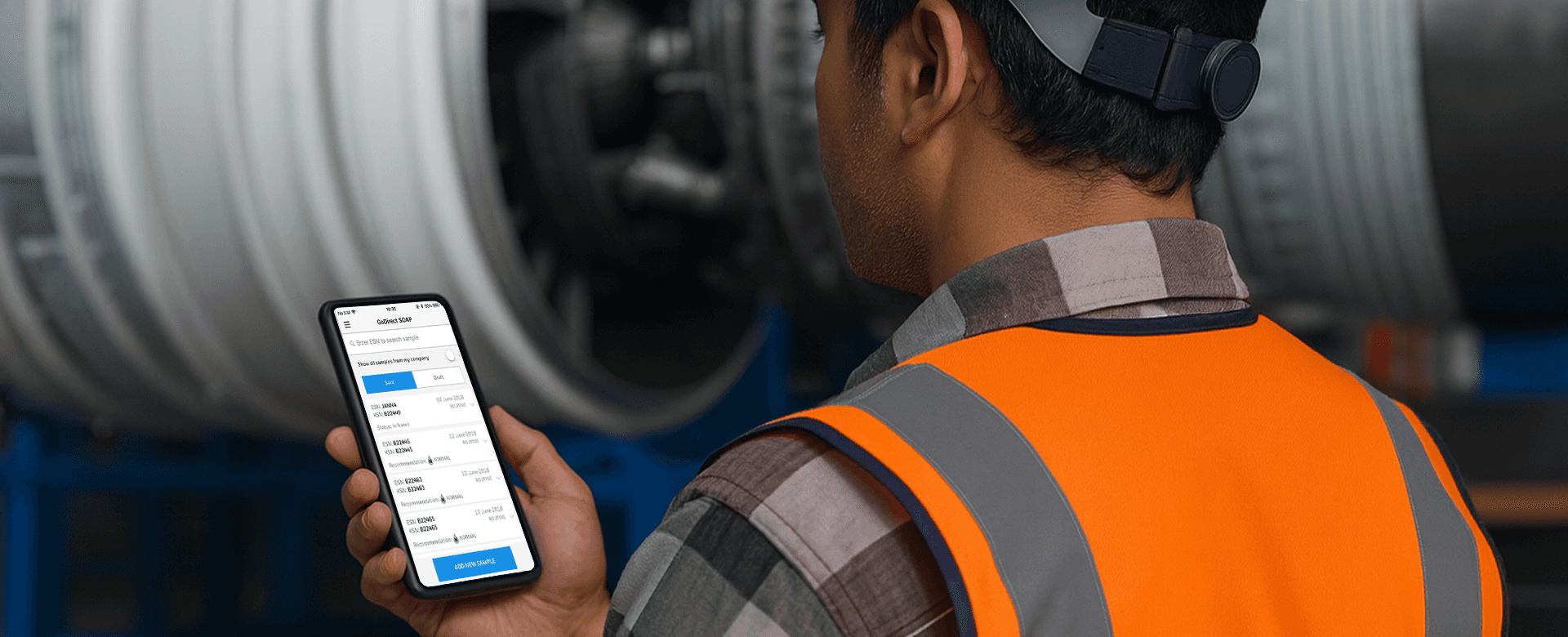
The GoDirect SOAP app shipped on Android, sampling off paper.
Paper Eliminated
The full SOAP submission moved to mobile, with nothing left on the checklist.
Fewer Failed Samples
Validation at entry cut the duplicate and misidentified submissions that drove costly rework.
Faster Engine-Health Decisions
Automatic lab routing removed the delays that rippled into diagnostics.
Shipped And Live
Released on Google Play, integrated across four platforms.
[ ↗ ] View on Google Play
From research notes to live submission app on Google Play
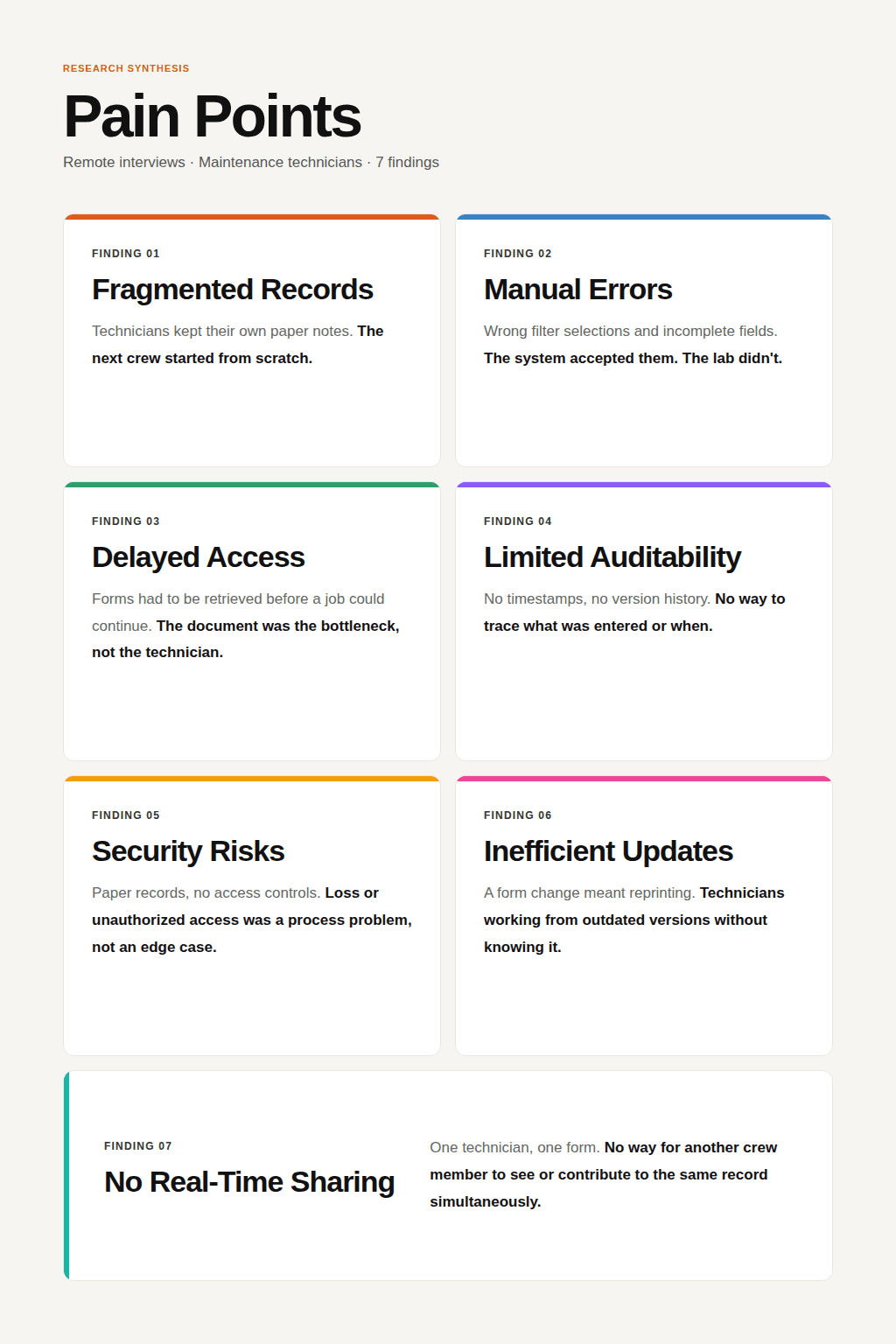
Seven failure modes on the board traced back to one root: a paper process with no validation and no audit trail. Manual errors and delayed lab access were symptoms, not the disease, which is why the fixes target the submission moment rather than the people.
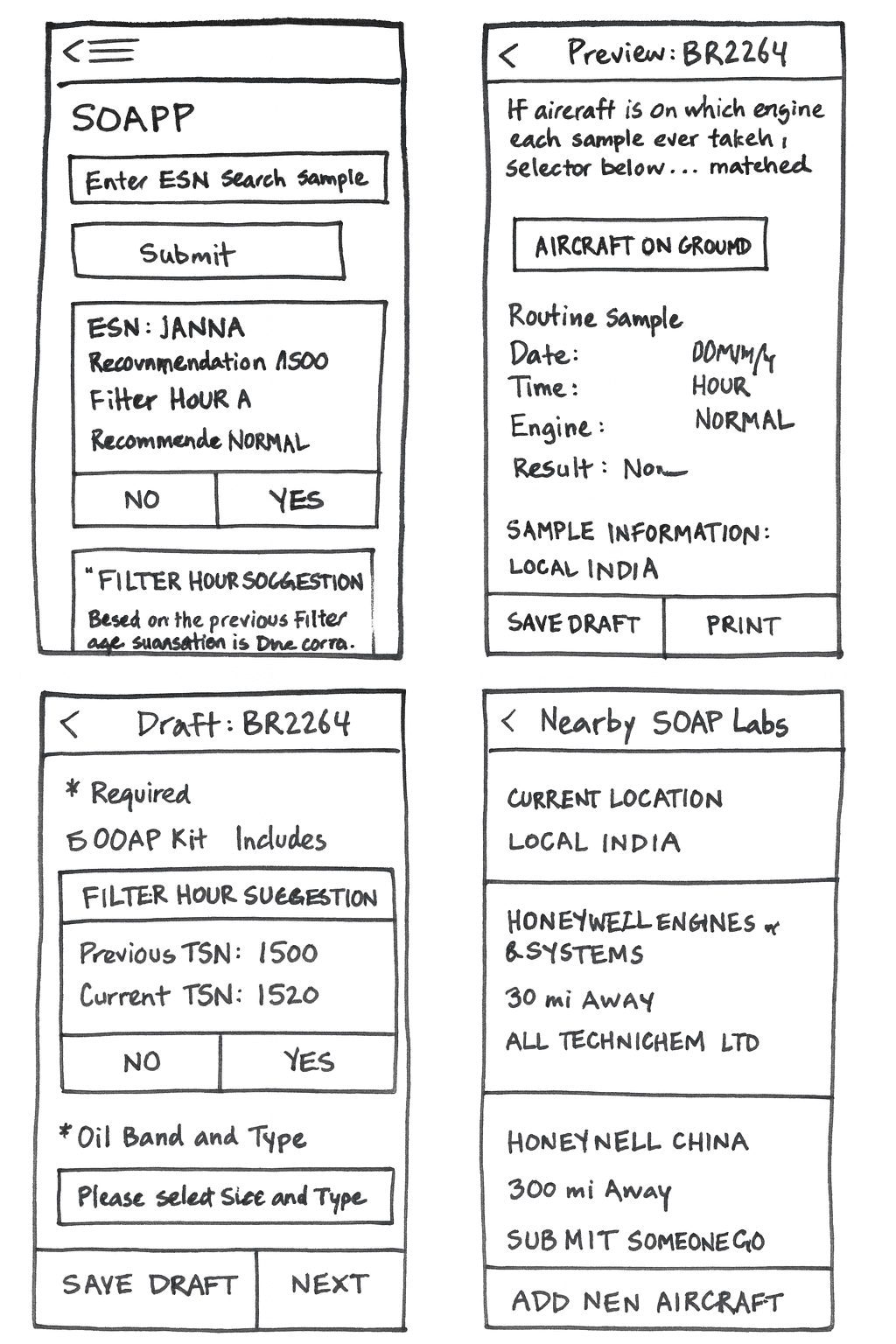
The early sketches worked the flow out in pen: the filter-hour prompt that questions an out-of-range reading, the nearby-labs routing, and the aircraft picker keyed to tail number. The logic was settled before a screen was drawn.
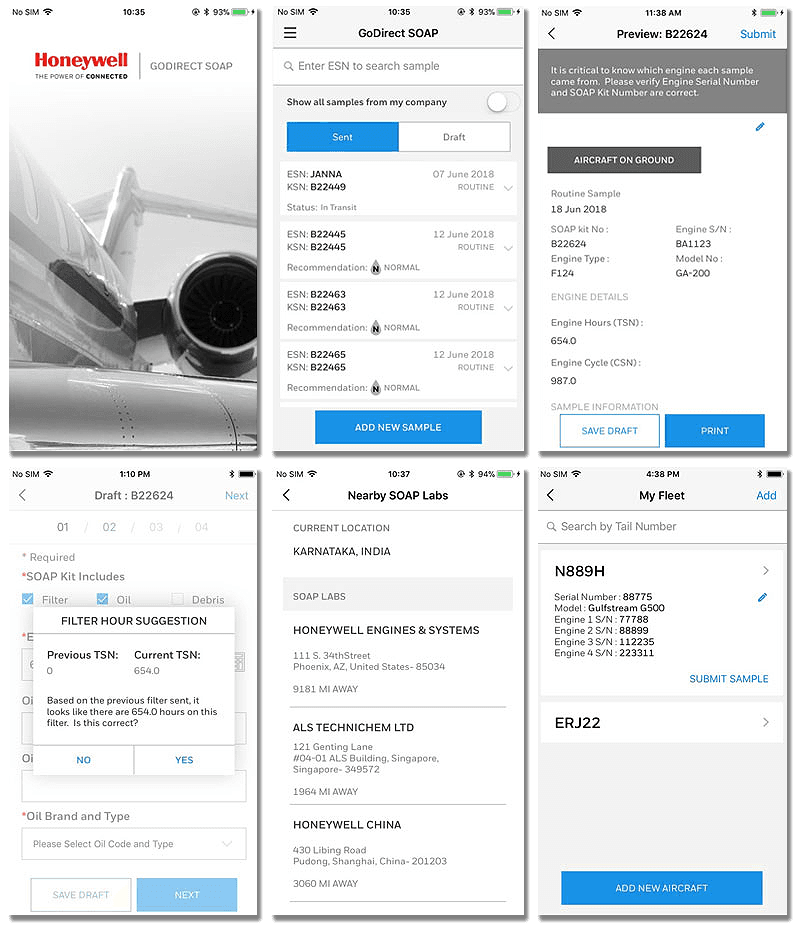
The shipped screens. The filter-hour prompt catches a suspect reading at entry, nearby SOAP labs sort by distance, and aircraft carry their engine serial numbers, so a submission leaves the field complete and correctly routed.
Testing against real lab workflows belonged before handoff, not after.
Field access belonged earlier. The most useful insights came from watching technicians work in real conditions, and that happened later than it should have, after the validation logic and filter guidance were already shaped. Testing against real lab workflows before handoff, rather than after, would have surfaced the sample-routing and filter edge cases that only appeared once the system met actual submission conditions.