Archives / Subscription Management
Projects / Insurance Underwriting Dashboard
Projects / Insurance Underwriting Dashboard
Subscription Management
Subscription Management
Subscription Management
Functionality That Fits Your Workflow
Functionality That Fits Your Workflow
Functionality That Fits Your Workflow
Read time: 16 – 20 minutes

Schneider Electric’s EcoStruxure Building platform delivers IoT‑connected control across HVAC, lighting, energy, and building automation systems. As part of this ecosystem, technicians purchased and activated software modules that unlocked specific building‑management capabilities. The Subscription Management redesign modernized how these modules were purchased, assigned, and renewed — replacing fragmented workflows with a unified experience that aligned to real‑world technician tasks. By consolidating module activation, entitlement visibility, and device‑level mapping into a single interface, the new system reduced friction, improved accuracy, and supported the broader EcoStruxure Building strategy of scalable, subscription‑based functionality.
Client / Schneider Electric
Client / Schneider Electric
Client / Schneider Electric
Category / IoT Devices
Category / IoT Devices
Category / IoT Devices
Team / UX, Product, Engineering
Team / UX, Product, Engineering
Team / UX, Product, Engineering
Platform / Desktop
Platform / Desktop
Platform / Mobile
Understanding the Problem
Technicians struggled to manage module subscriptions due to limited visibility, unclear activation paths, and fragmented documentation. Many users were unaware of available capabilities, expiration dates, or renewal options leading to unused modules, workaround behaviors, and reduced perceived value.
Technicians struggled to manage module subscriptions due to limited visibility, unclear activation paths, and fragmented documentation. Many users were unaware of available capabilities, expiration dates, or renewal options leading to unused modules, workaround behaviors, and reduced perceived value.
Because Subscription Management operated within the EcoStruxure Building platform, these gaps had real operational consequences. Customers often paid for subscriptions they forgot they had, used shared credentials to bypass barriers, and faced confusing hierarchies across departments that complicated user management. The lack of a centralized view made it difficult to align entitlements with actual building‑level tasks, undermining the value of Schneider’s modular automation strategy.
Problems:
No centralized view of module status or capabilities
Difficulties locating activation paths and documentation
Users unaware of available modules or their value
Shared credentials used to bypass subscription barriers
Confusing hierarchy across departments and organizations
Problems:
No centralized view of module status or capabilities
Difficulties locating activation paths and documentation
Users unaware of available modules or their value
Shared credentials used to bypass subscription barriers
Confusing hierarchy across departments and organizations
Subscription Management — Mapping Activation Complexity
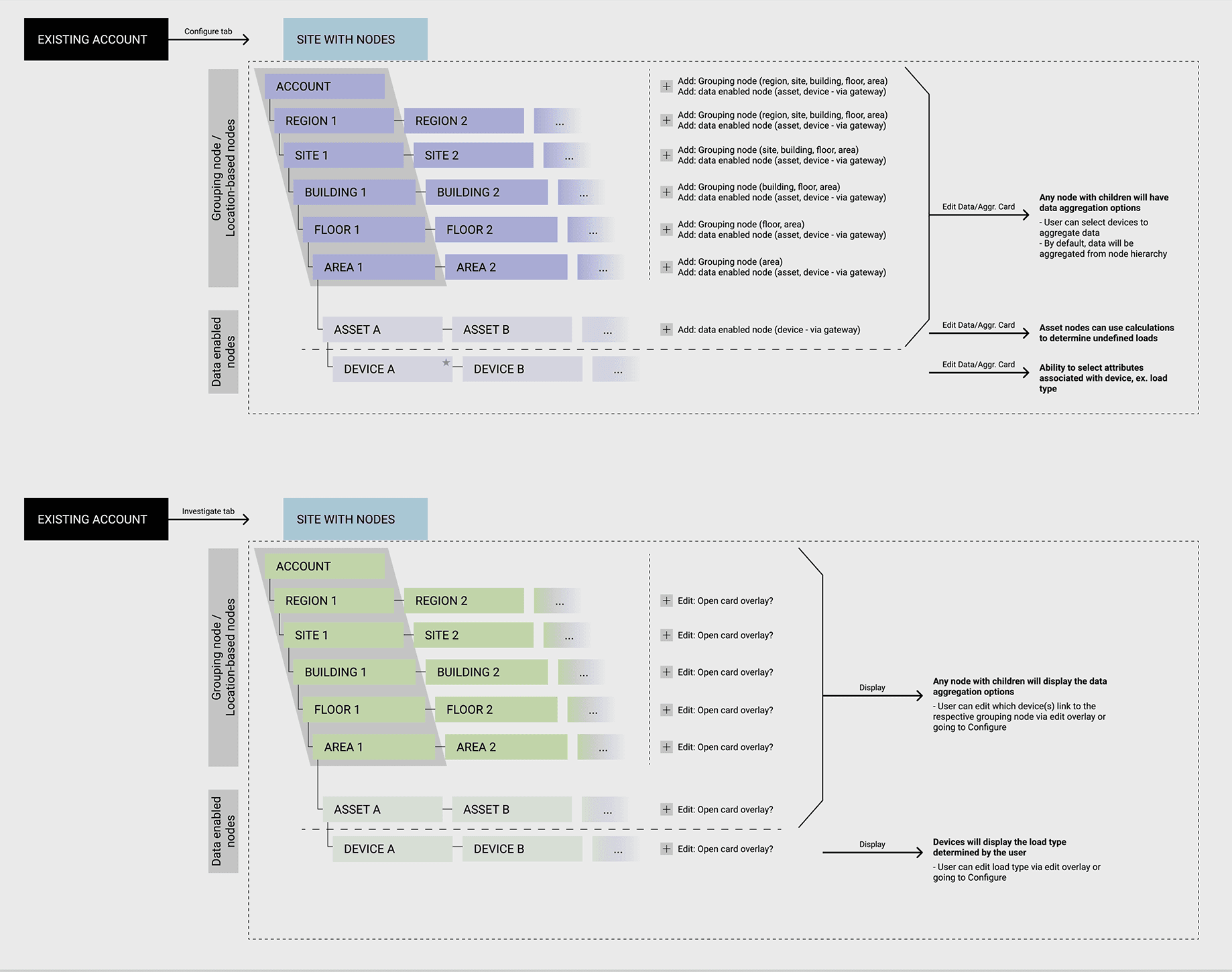
Challenge Addressed:
Subscription activation was complicated by inconsistent ownership models across departments, regions, and facilities. Some modules were purchased at the account level, others at the site or device level, and some shared across multiple organizations. These variations created confusion around who could activate what, where modules applied, and how permissions cascaded across nodes.
Challenge Addressed:
Subscription activation was complicated by inconsistent ownership models across departments, regions, and facilities. Some modules were purchased at the account level, others at the site or device level, and some shared across multiple organizations. These variations created confusion around who could activate what, where modules applied, and how permissions cascaded across nodes.
Response:
Mapped hierarchy across account, region, site, and device levels
Defined how subscription types aligned to each organizational node
Visualized node additions and module compatibility
Exposed subscription coverage across all objects
Unified teams around a shared activation logic mode
Response:
Mapped hierarchy across account, region, site, and device levels
Defined how subscription types aligned to each organizational node
Visualized node additions and module compatibility
Exposed subscription coverage across all objects
Unified teams around a shared activation logic mode
Subscription Purchase — Mapping Activation Logic
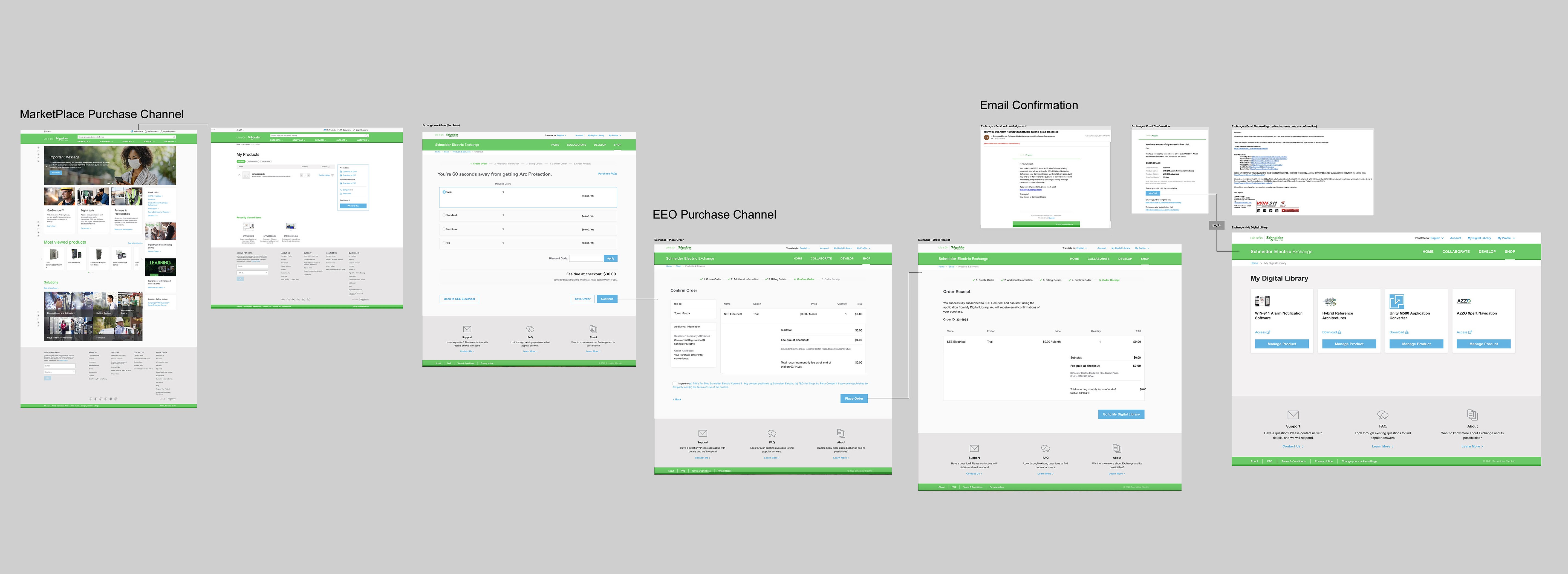
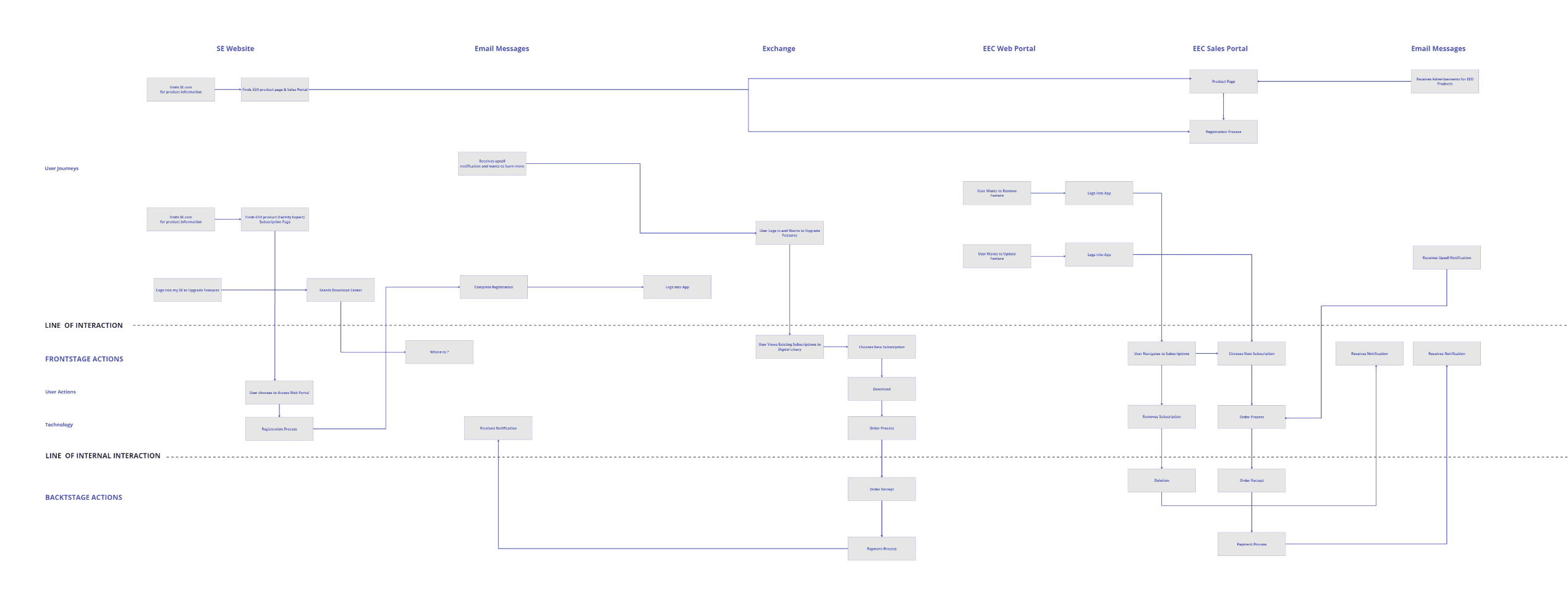
Challenge Addressed:
The activation process for new modules was complex and varied across subscription types, making it difficult to design a seamless purchase experience. Organizational structures—such as departmental subscriptions within a single company or shared subscriptions across multiple entities—introduced logic gaps that disrupted user expectations and system behavior.
Challenge Addressed:
The activation process for new modules was complex and varied across subscription types, making it difficult to design a seamless purchase experience. Organizational structures—such as departmental subscriptions within a single company or shared subscriptions across multiple entities—introduced logic gaps that disrupted user expectations and system behavior.
Response:
Researched and documented the full activation workflow, capturing dependencies across account, service, device, and subscription layers
Used findings to inform contextual inquiries and interface decisions, ensuring the purchase flow aligned with technician expectations and organizational realities
Response:
Researched and documented the full activation workflow, capturing dependencies across account, service, device, and subscription layers
Used findings to inform contextual inquiries and interface decisions, ensuring the purchase flow aligned with technician expectations and organizational realities
Workflow Refinement — Visualizing Module Dependencies
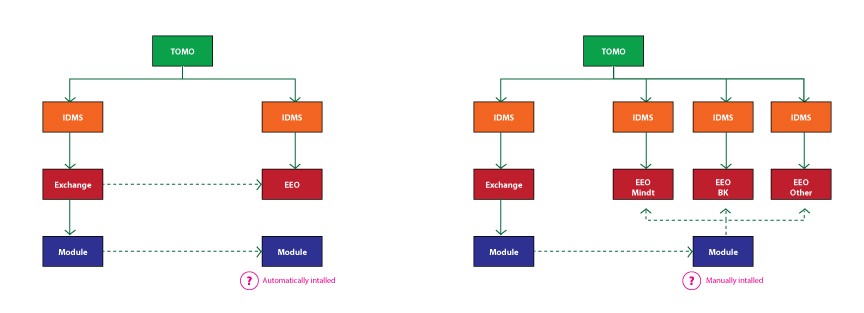
Challenge Addressed:
Facility managers like Tomo couldn’t see how their actions triggered downstream investigative modules. Some modules appeared automatically based on upstream selections, while others required manual installation. Because these dependencies were hidden, technicians didn’t understand why certain modules showed up, when they became available, or how workflows connected across tools
Challenge Addressed:
Facility managers like Tomo couldn’t see how their actions triggered downstream investigative modules. Some modules appeared automatically based on upstream selections, while others required manual installation. Because these dependencies were hidden, technicians didn’t understand why certain modules showed up, when they became available, or how workflows connected across tools
Response:
• Mapped how user actions triggered downstream workflows
• Identified auto‑installed vs. manually installed modules
• Visualized dependency chains across investigative steps
• Added cues for newly available modules
• Reduced confusion by exposing install logic
Response:
Mapped how user actions triggered downstream workflows
Identified auto‑installed vs. manually installed modules
Visualized dependency chains across investigative steps
Added cues for newly available modules
Reduced confusion by exposing install logic
User Interviews — Facility & Technician Needs
Challenge Addressed:
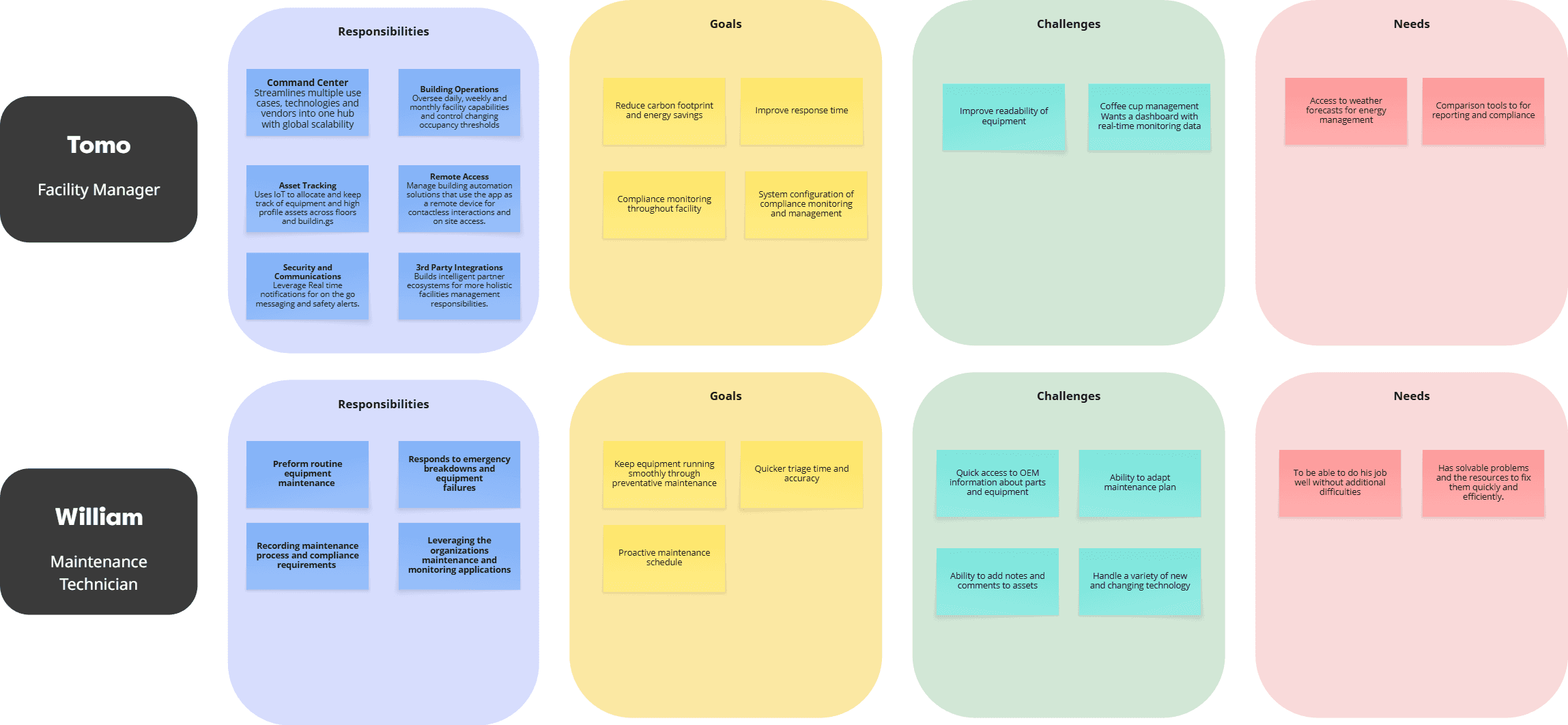
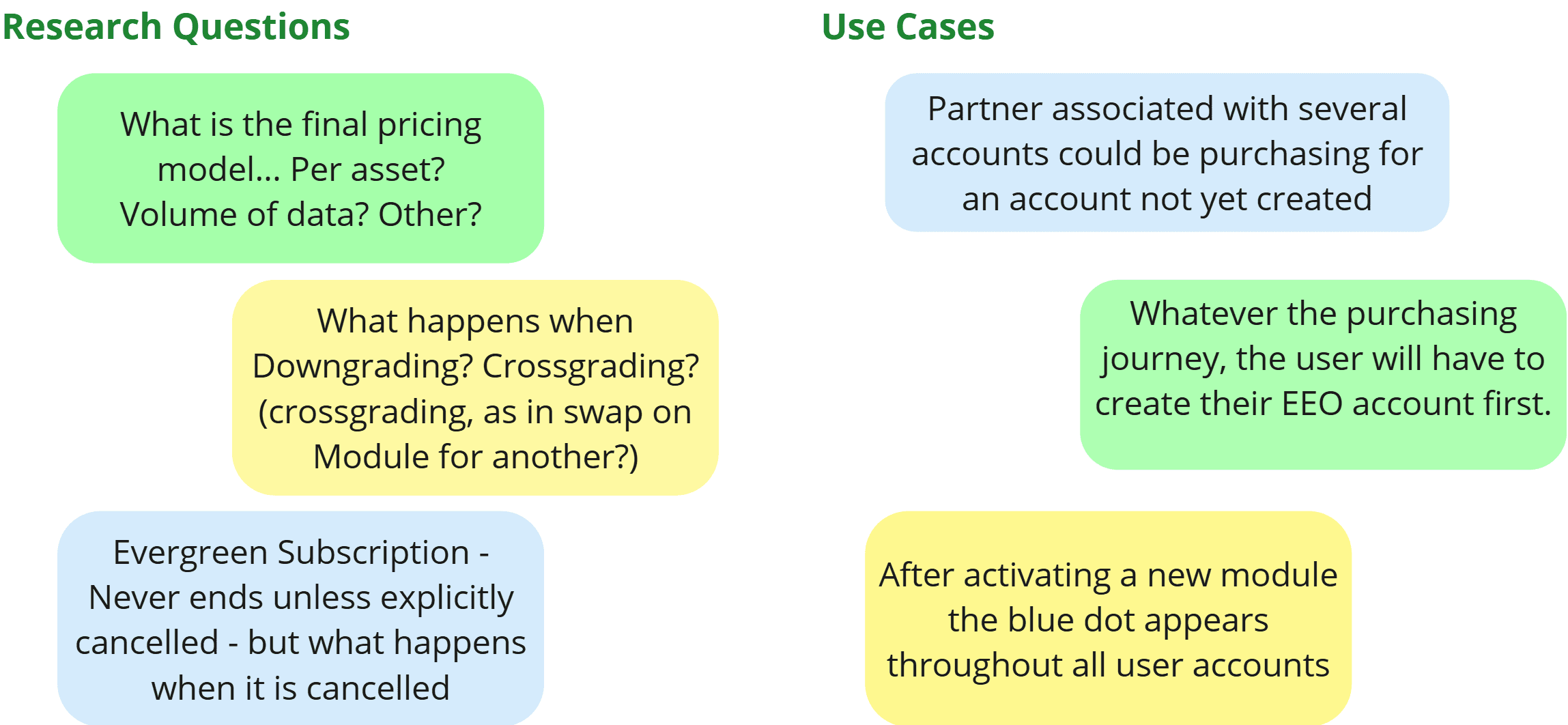
The compliance monitoring feature revealed dependencies on specific modules and subscription types, but technician workflows and facility manager needs were not fully understood. Without grounded user insights, assumptions caused misalignment with real-world behavior.
Challenge Addressed:
The compliance monitoring feature revealed dependencies on specific modules and subscription types, but technician workflows and facility manager needs were not fully understood. Without grounded user insights, assumptions caused misalignment with real-world behavior.
Response:
Used UserTesting.com to recruit facility managers and technicians, guided by two pre-crafted personas
Conducted interviews with three facility managers and three technicians, capturing subscription needs, workflows, and module dependencies
Validated key assumptions about compliance monitoring and credential sharing, informing future product decisions
Response:
Used UserTesting.com to recruit facility managers and technicians, guided by two pre-crafted personas
Conducted interviews with three facility managers and three technicians, capturing subscription needs, workflows, and module dependencies
Validated key assumptions about compliance monitoring and credential sharing, informing future product decisions
Wireframes for Development Alignment
Challenge Addressed:
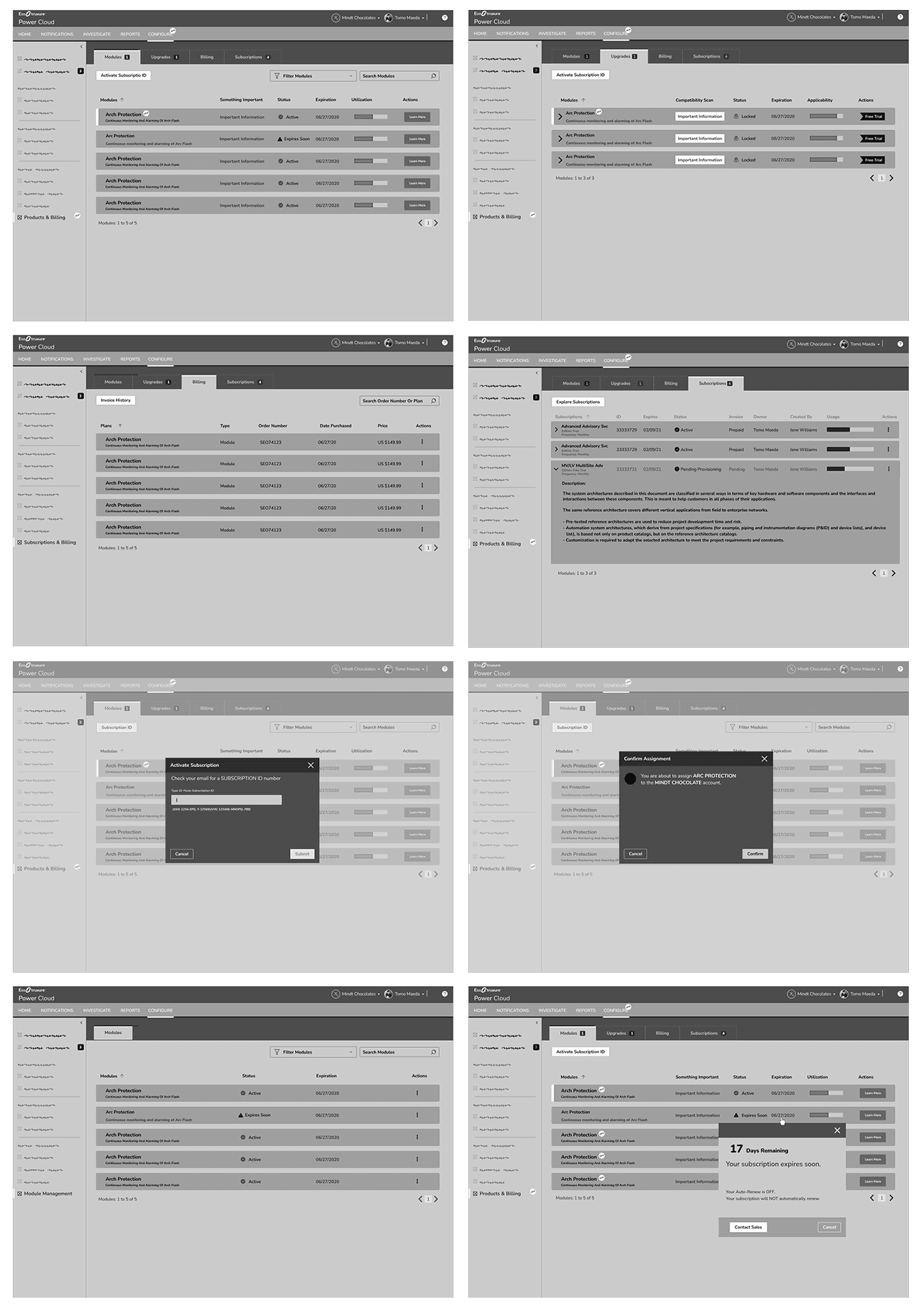
Stakeholders struggled to visualize module subscriptions, activation paths, and role‑based flows. Without clear wireframes, discussions became fragmented, expectations were inconsistent, and alignment on functionality across screens was difficult to achieve.
Challenge Addressed:
Stakeholders struggled to visualize module subscriptions, activation paths, and role‑based flows. Without clear wireframes, discussions became fragmented, expectations were inconsistent, and alignment on functionality across screens was difficult to achieve.
Response:
Clarify user flows and module relationships before visual design begins
Enable early usability testing and iterative feedback
Reduce ambiguity in development handoff by visualizing logic and dependencies
Response:
Clarify user flows and module relationships before visual design begins
Enable early usability testing and iterative feedback
Reduce ambiguity in development handoff by visualizing logic and dependencies
Response:
Clarify user flows and module relationships before visual design begins
Enable early usability testing and iterative feedback
Reduce ambiguity in development handoff by visualizing logic and dependencies
UI Features — Subscription Visibility & Module Management
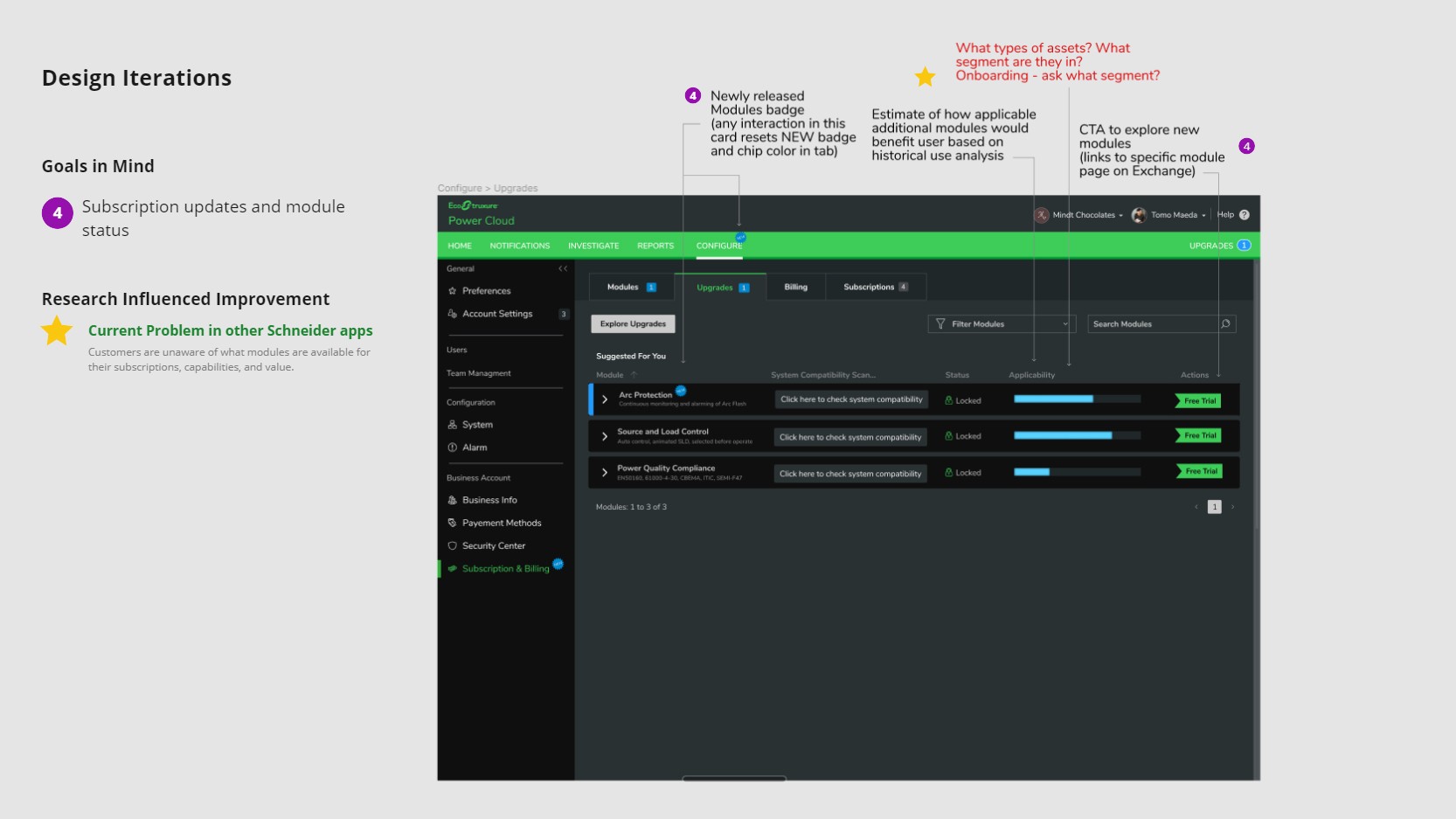
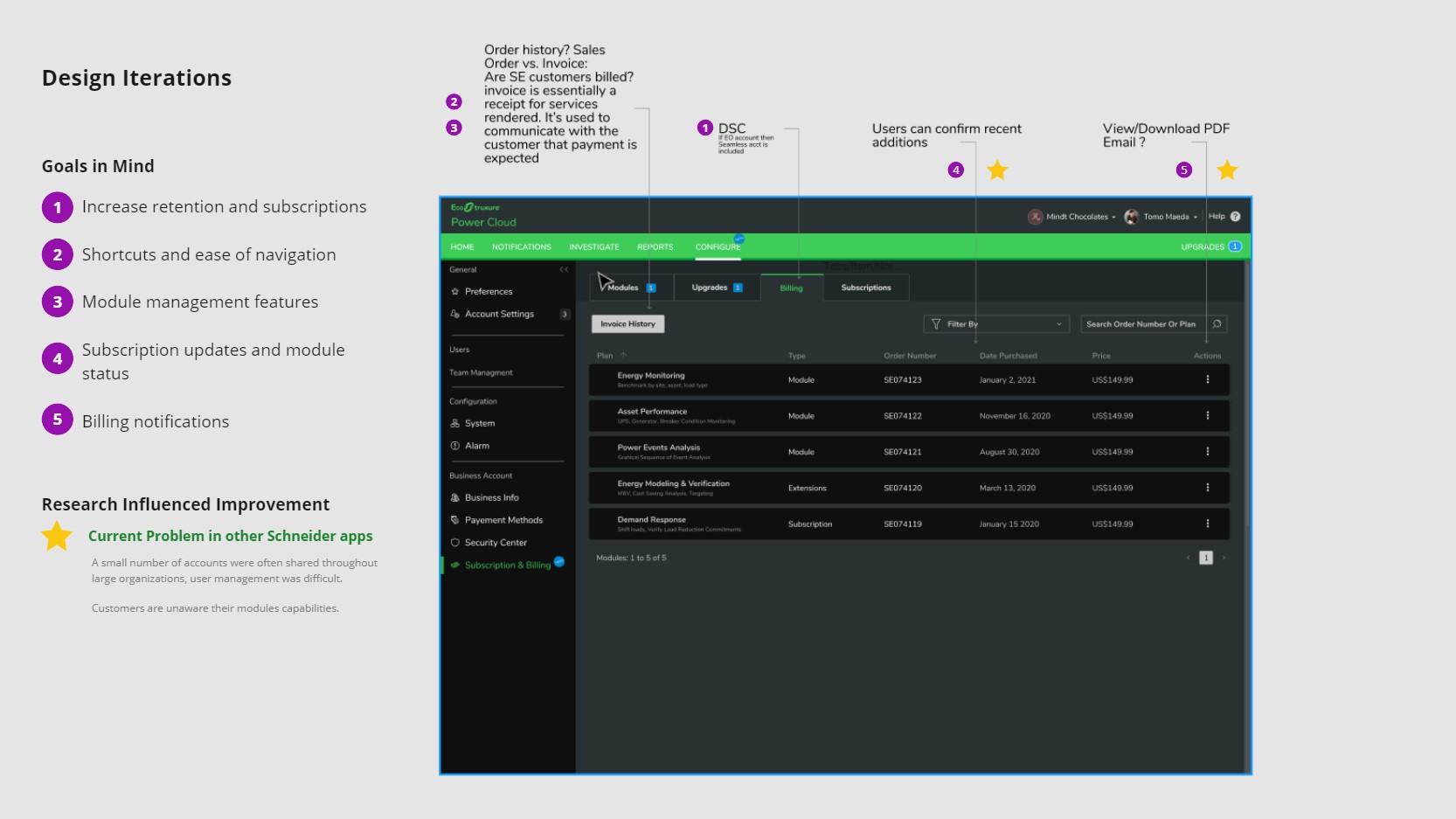
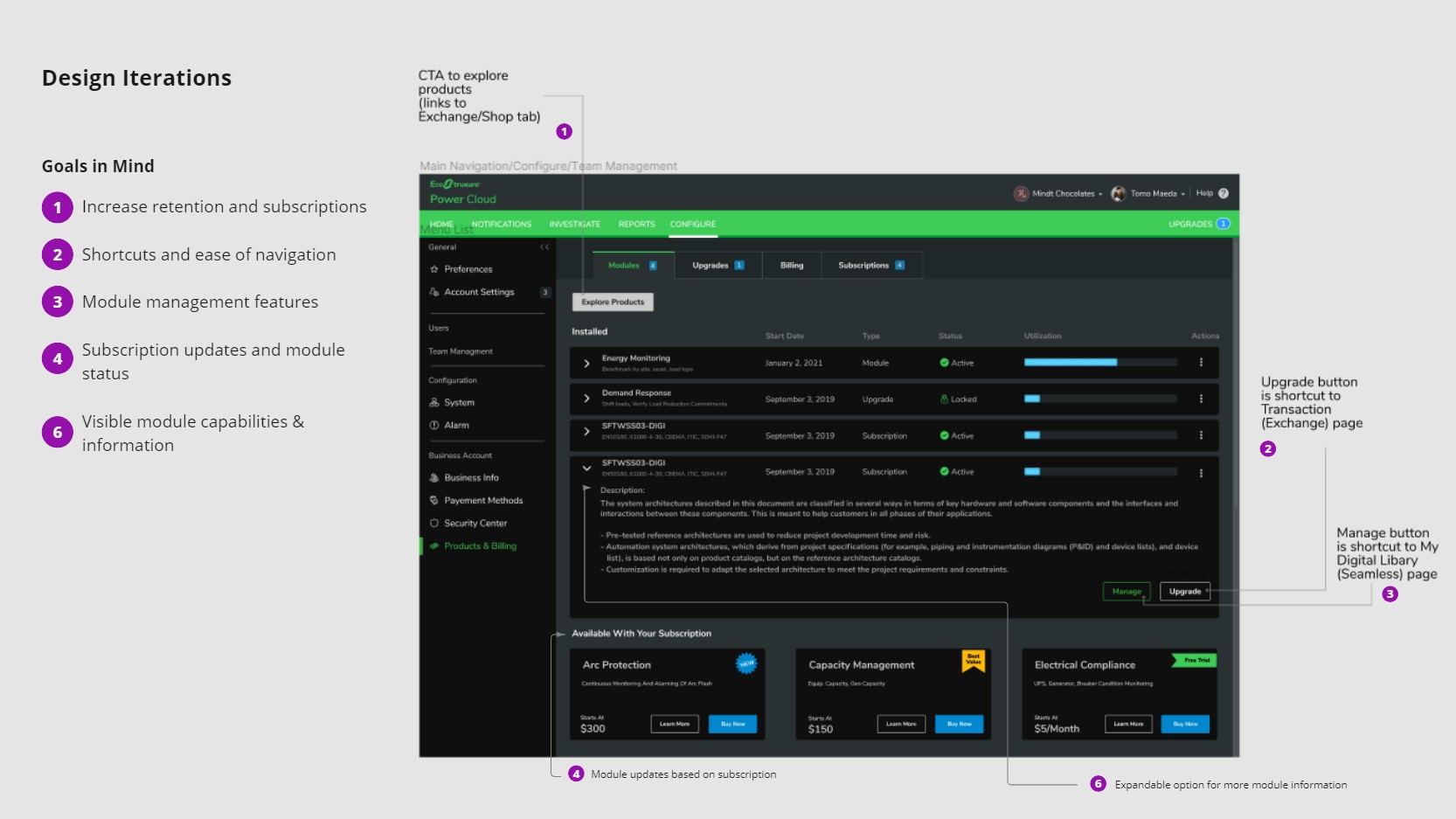
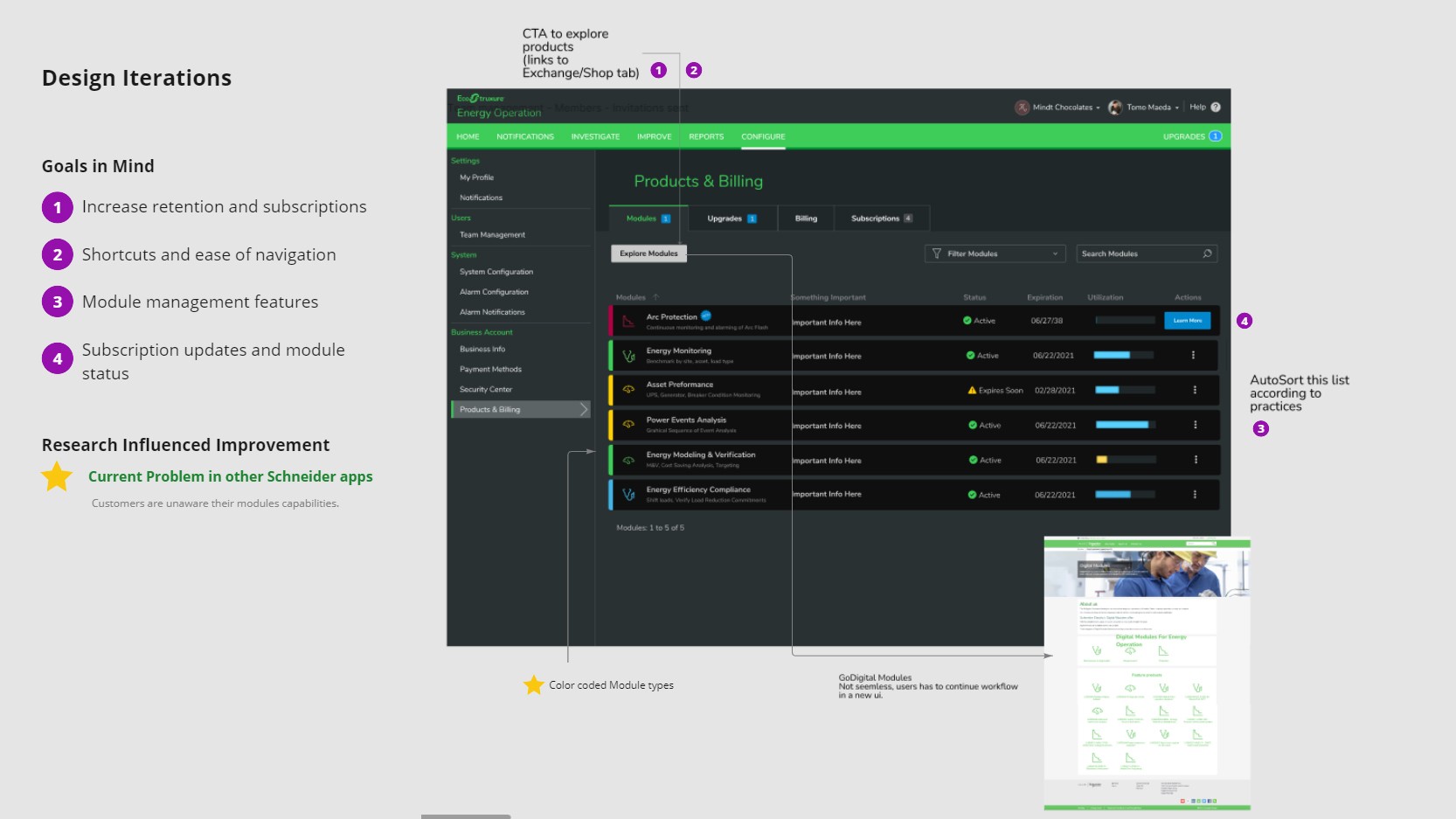
Challenge Addressed:
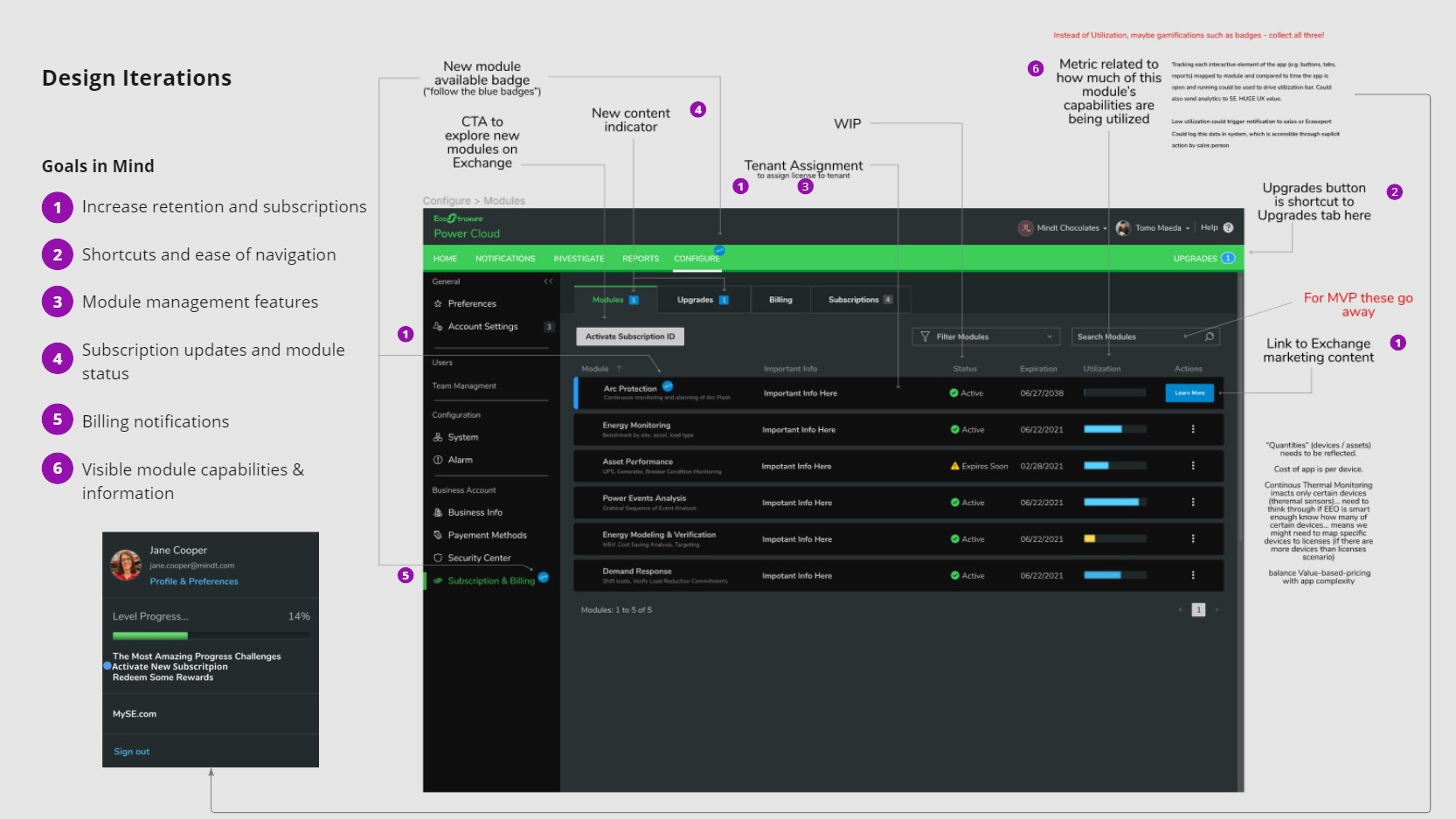
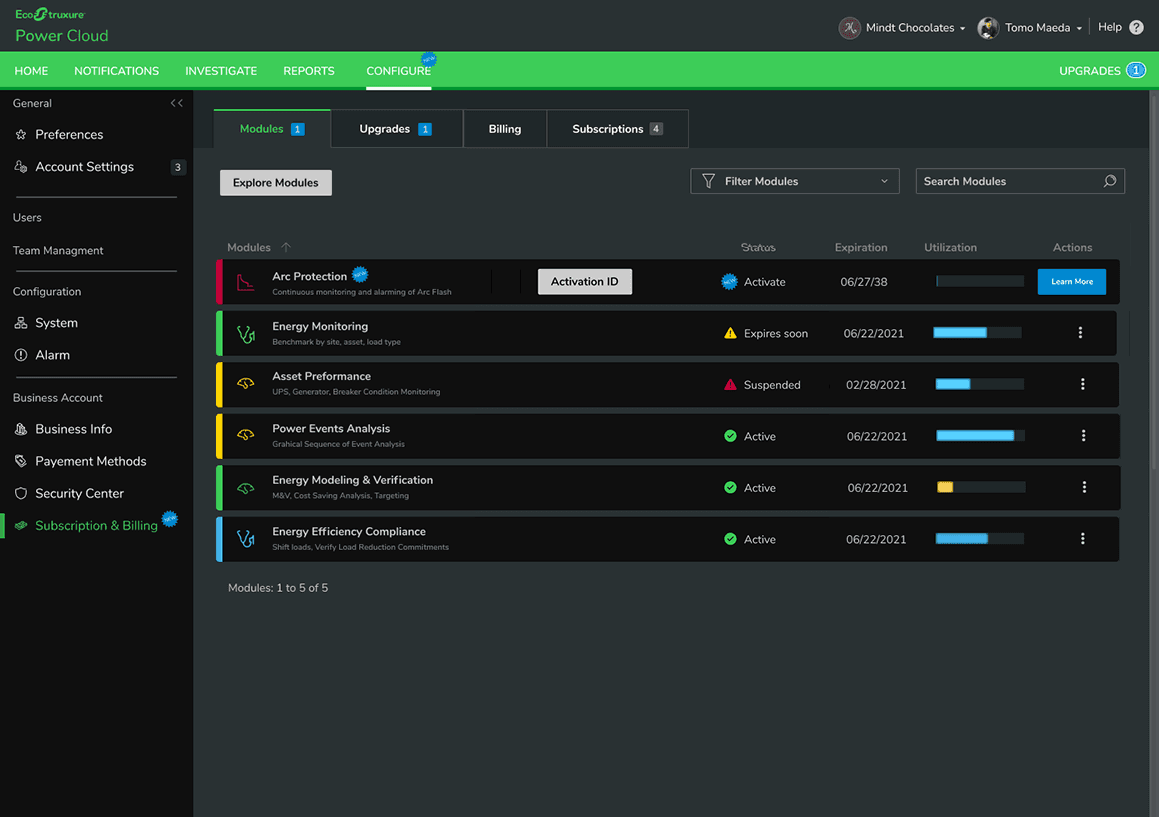
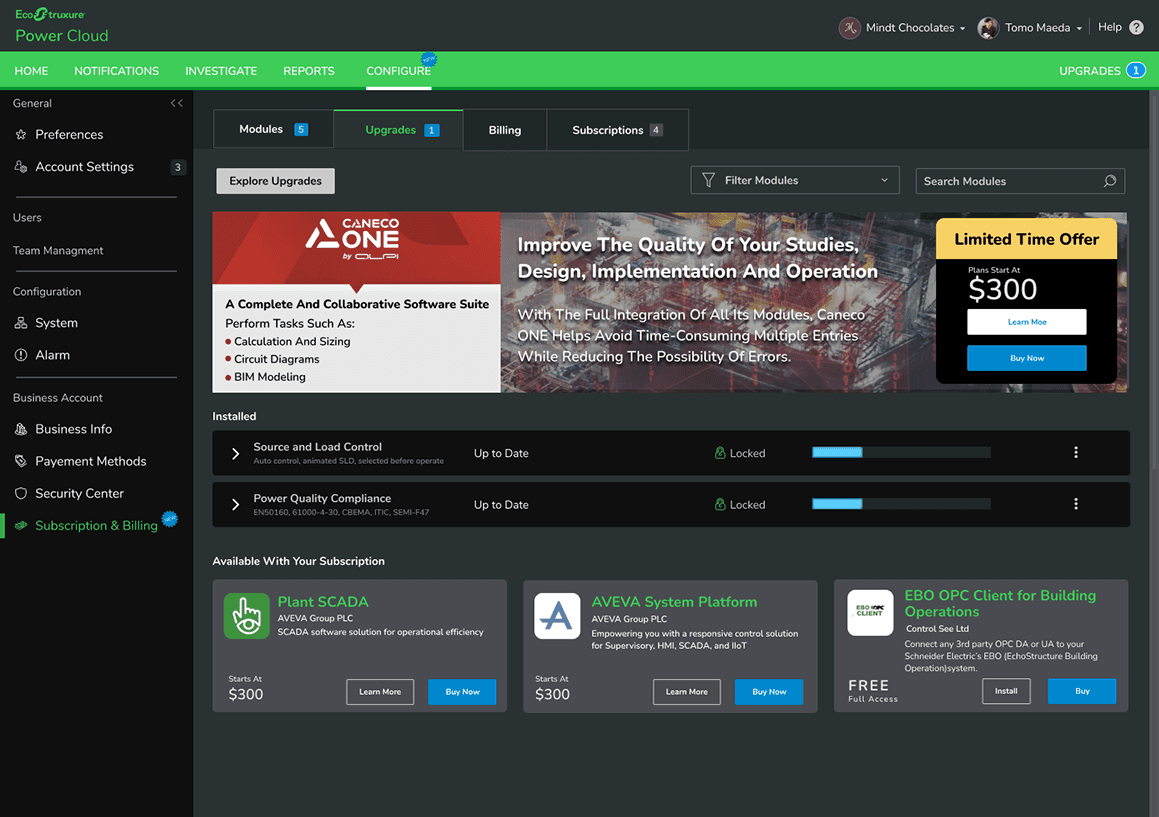
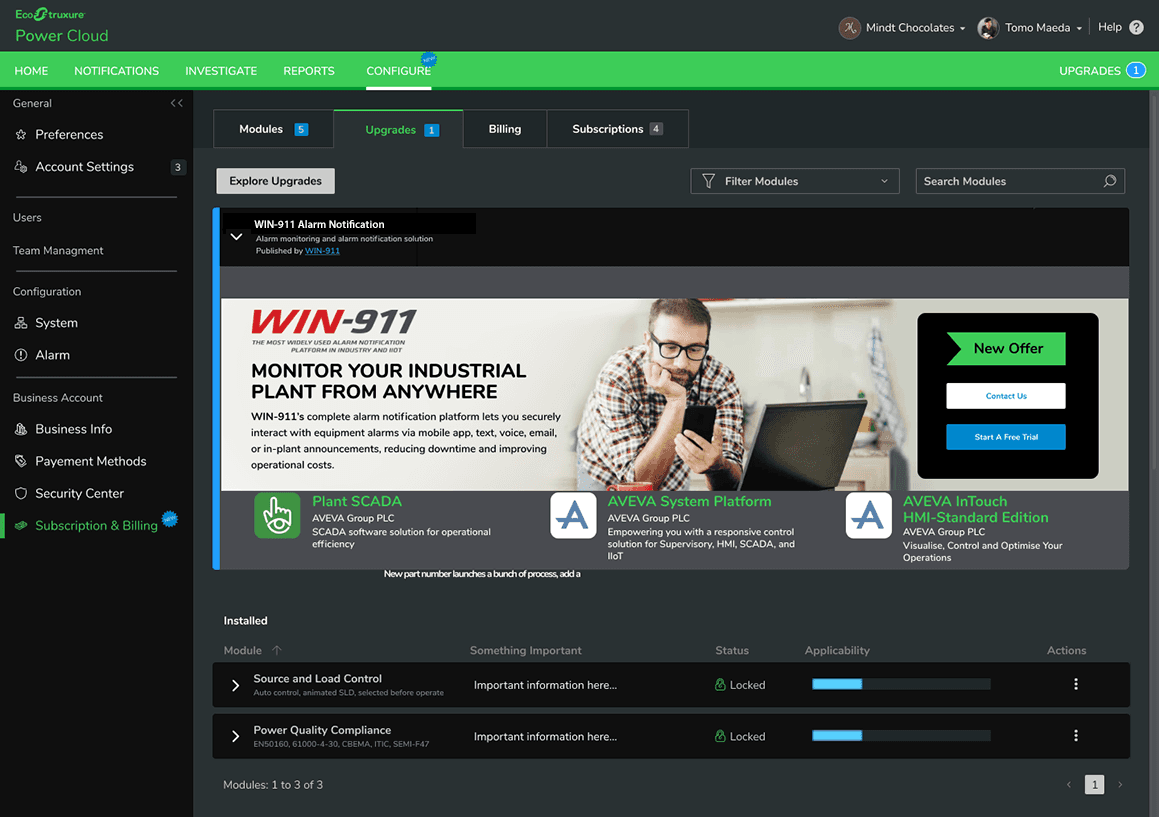
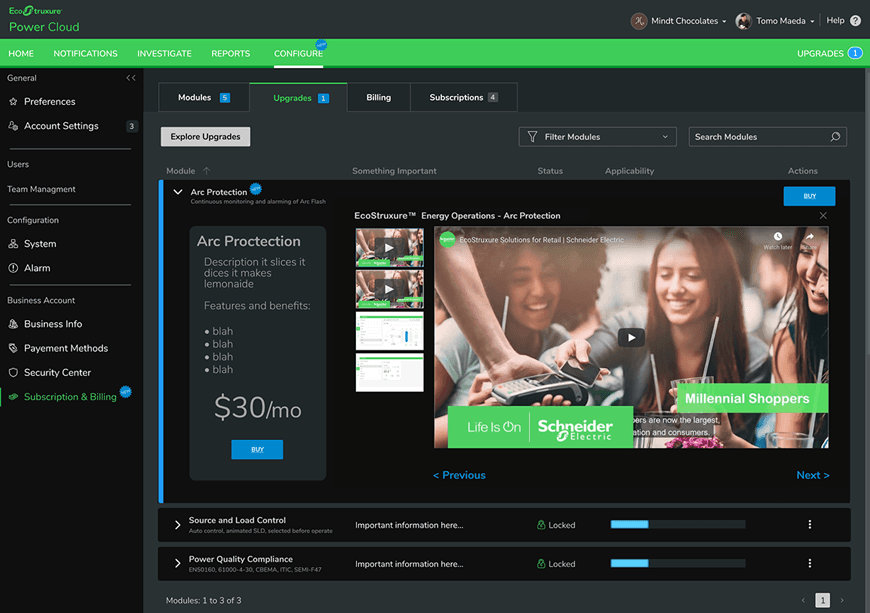
Technicians lacked visibility into module capabilities, subscription status, and upgrade paths. Navigation was fragmented, and key actions—like exploring new modules or managing subscriptions—were buried across screens.
Challenge Addressed:
Technicians lacked visibility into module capabilities, subscription status, and upgrade paths. Navigation was fragmented, and key actions—like exploring new modules or managing subscriptions—were buried across screens.
Response:
Introduced CTA to explore modules via Exchange, increasing discoverability
Added “New Module Available” badges to surface upgrade opportunities
Exposed module utilization metrics to inform retention and renewal strategies
Designed shortcuts for upgrades, billing, and tenant assignment to reduce friction
Response:
Clarify user flows and module relationships before visual design begins
Enable early usability testing and iterative feedback
Reduce ambiguity in development handoff by visualizing logic and dependencies
Response:
Clarify user flows and module relationships before visual design begins
Enable early usability testing and iterative feedback
Reduce ambiguity in development handoff by visualizing logic and dependencies
Scalable, Technician-Centered Purchase Experience
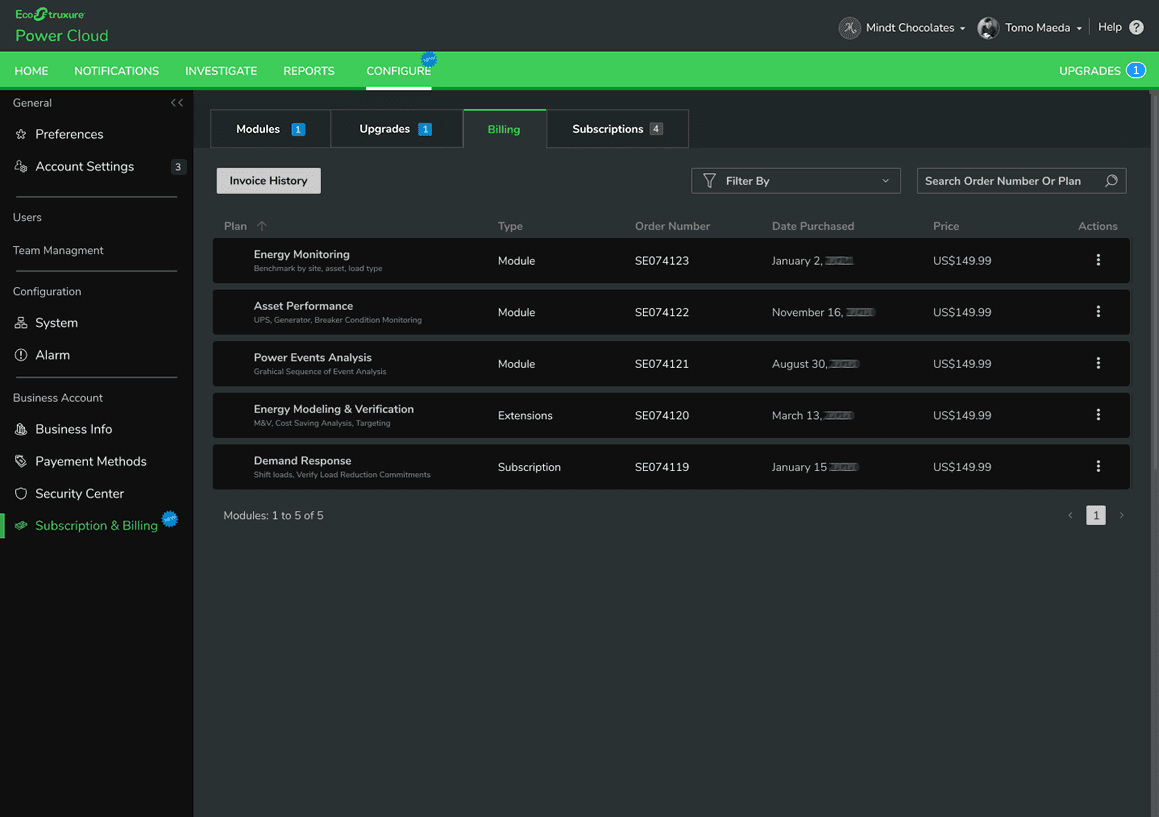
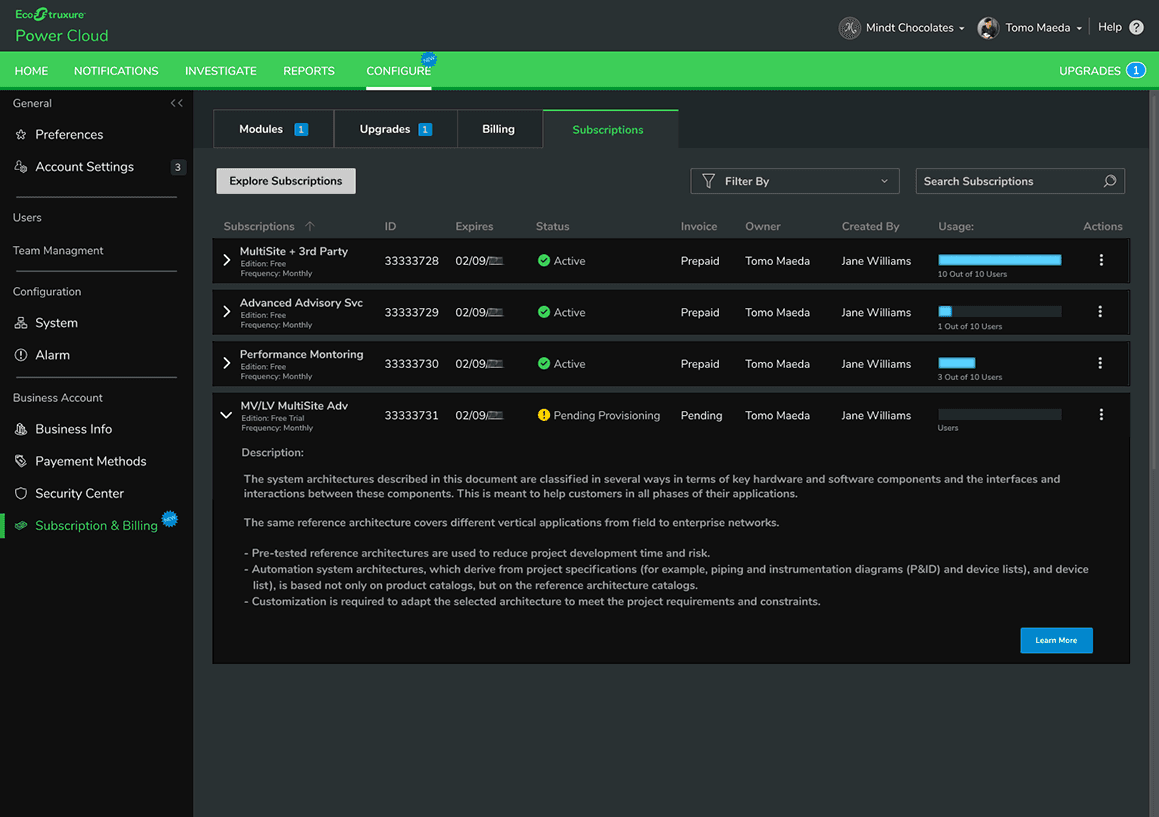
Challenge Addressed:
Teams were misaligned on how subscriptions, activation states, and permissions should behave across the platform. Without a unified model, engineering made assumptions, product debated edge cases, and technicians experienced inconsistent flows
Challenge Addressed:
Teams were misaligned on how subscriptions, activation states, and permissions should behave across the platform. Without a unified model, engineering made assumptions, product debated edge cases, and technicians experienced inconsistent flows
Results:
Translated subscription logic into clear, testable user flows before visual design
Built a shared activation model that eliminated ambiguity across UX, Product, and Engineering
Exposed edge cases early, reducing rework and accelerating development
Enabled rapid usability testing to validate flow clarity with real technicians
Delivered wireframes that became the single source of truth for implementation
Results:
Translated subscription logic into clear, testable user flows before visual design
Built a shared activation model that eliminated ambiguity across UX, Product, and Engineering
Exposed edge cases early, reducing rework and accelerating development
Enabled rapid usability testing to validate flow clarity with real technicians
Delivered wireframes that became the single source of truth for implementation
Other Projects
Financial Crimes Dashboard
Human Resources Tools
HR Resources Tools
Aircraft Engine Oil Analysis
Underwriting
Dashboard
AI Assistant
Virtual Paul